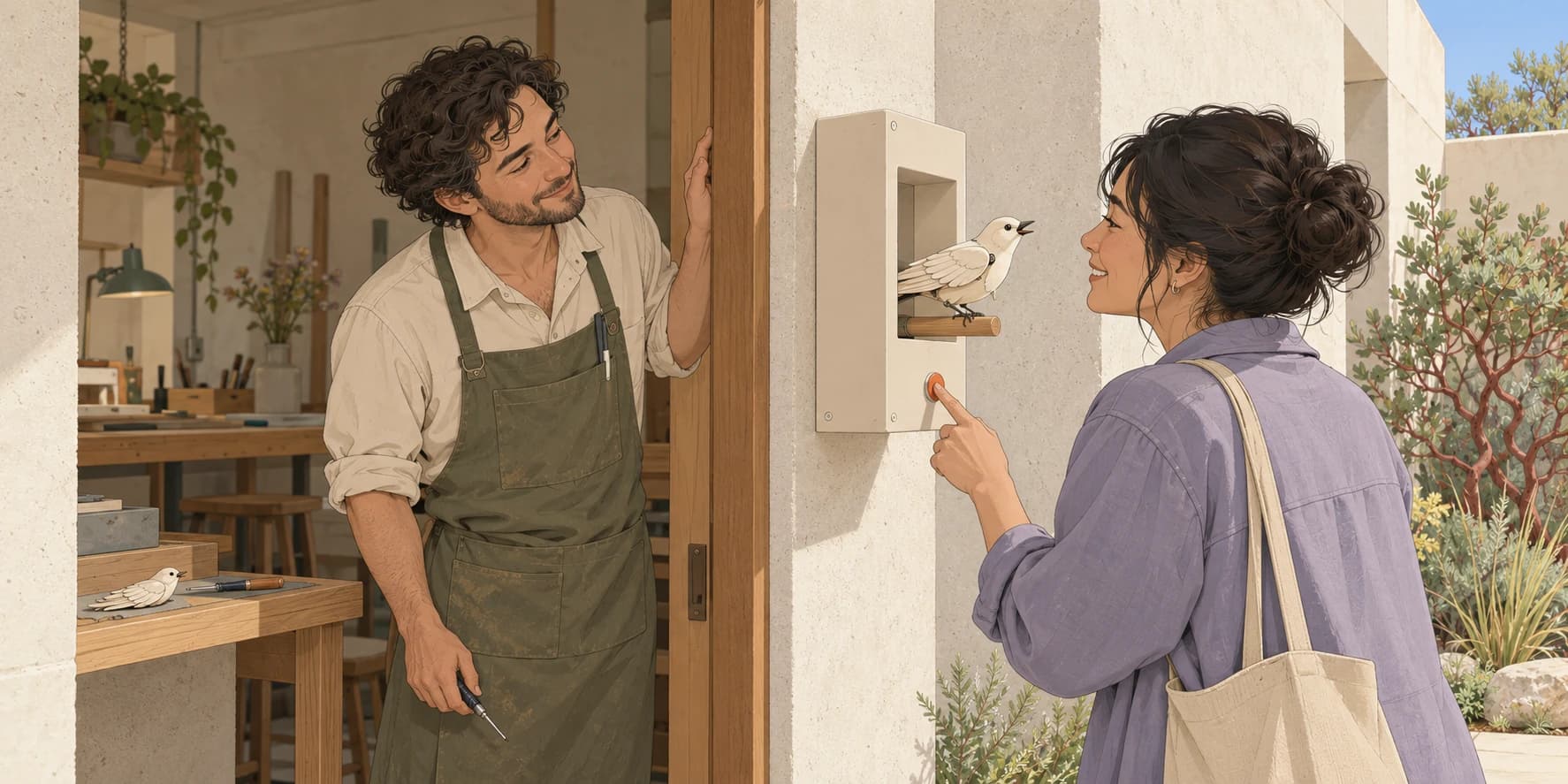
For years, I've described software people love as a Venn diagram of useful, usable, and crafted. It solves a problem worth solving. People can understand it and use it. And the details show that someone cared enough to make it good.
I still believe in that model. But some software has another quality that's harder to describe and much harder to achieve. You can feel the people who made it.
Their humor comes through. Their quirks survive. You encounter a small consideration that makes you think someone understood what this moment would feel like. The software has a personality you come to recognize.
I think of that as soul.
Software with soul lets us feel the humans behind the interface. Humans have histories, inside jokes, strong opinions about small things, and ways of expressing care. Sometimes enough of that makes it into the product that using it feels like spending time with the people who built it.
I saw this at Slack.
Stewart Butterfield was a tremendous writer with an incredible wit. Before Slack's preview launch, he wrote an internal memo called We Don't Sell Saddles Here. He asked the team to think about the change Slack could make in people's working lives. His writing gave the company a way to understand what it was building, and a voice you could recognize.
Anna Pickard helped that voice become part of everyday use. She'd worked on Glitch, the game that preceded Slack, and returned as Slack took shape. She brought extraordinary care to the words people encountered in the product, including places most companies would barely consider writing for.
When you'd read all your messages, Slack might offer you a tractor. There was something wonderfully unnecessary about it. You'd finished catching up at work, and someone had decided that this deserved a tiny, absurd reward.
The release notes carried that same sensibility. An October 2015 update explained that choosing Safari as your browser would now actually open links in Safari. The next fix promised that Chrome links would open in, “all together now,” Chrome. Even the obviousness of a bug fix became something the team could share a laugh about. Those notes acknowledged the mistake while letting you hear the person writing them.
The tradition continued. In a March 2026 iOS update, a fix for emoji that wouldn't send came with a small apology. “Please accept our sincerest apoloji.”
Release notes are easy to overlook. Someone had to choose to write them that way, spend time on them, and believe that the person reading them deserved the effort.
Huddles carried that care into sound. If you were alone in a huddle, smooth jazz would fade in while you waited. Anna Niess, who led product design work at Slack, had proposed using music from Glitch, the game the original team had been building before Slack. A piece of the team's history became part of an ordinary working day.
That history matters. A well-made game gives you a world to spend time in. Its creators' personalities come through in the sounds, the writing, and the strange little details you discover along the way. Slack inherited some of that instinct. People would spend hours here. The team wanted those hours to feel pleasant.
Taken together, these decisions made the company feel human. You could sense the care behind the interface, even if you never knew the names of the people responsible.
At Nubank, I see another expression of this in customer support.
In Brazil, our customer support specialists have room to create what we call WOW moments. A conversation might lead to a handwritten note or a gift chosen for that person. Sometimes a specialist spends time talking with a customer about their life, because the conversation has revealed something that deserves attention.
In one story Cristina Junqueira shared publicly, a customer's dog kept chewing their Nu card. The team sent the dog a rubber card. Someone listened closely enough to respond with affection and a sense of humor.
Customer support is an interface to the product. When you call because something has gone wrong, the person who answers becomes your experience of the company. Their patience matters. So does their freedom to respond to you as a person.
One of Nubank's core values is that we want our customers to love us fanatically. That asks something of us, too. We have to invest time and effort in expressing love for our customers. The people answering those calls need room to bring their own care and judgment to the experience.
Soul can be funny. It can also be quiet, patient, and serious. The appropriate expression depends on the person and the moment. A joke when you're worried about your money can make you feel that nobody is listening. A thoughtful response can make you feel that someone is.
I'm starting to notice this dimension in personal agents, too. The way an agent communicates changes how it feels to work with it. Instinct is one example for me. Its tone feels right. That judgment is difficult to reduce to a feature list, but it affects the experience.
As the conversation becomes more of the interface, those choices become harder to separate from the product itself. How much does it say? How does it acknowledge a mistake? Does it know when a little humor is welcome and when to get on with the work? Each choice expresses a view of how people should be treated.
This raises a question I've been thinking about as a designer. When more of the experience is generated, how do we make sure our humanity still comes through?
I think we may have more opportunity to do this now. Designers can increasingly build and try the details they imagine, including ideas that previously required finding an engineer with time to help. We can hear the sound in context, try different words, and see whether a small interaction feels the way we hoped.
If generating software saves us time, some of that time can go toward the considerations we used to struggle to fit in. We can spend longer on the message someone sees when they're confused. We can try the slightly odd idea and find out whether it makes the experience better. We can give more people on the team a way to contribute something of themselves.
That opportunity requires us to make choices. A request to make an experience delightful still leaves all the interesting decisions open. What would we find funny here? What do we know about the person using this? What would we take the time to do for them?
Useful, usable, and crafted still matter. Soul grows through the particular people making those choices, and through a culture that gives them room to care.
As it gets easier to make software, I'd like us to spend more of our attention on what of ourselves we put into it. I want the people using what we build to feel that someone was there, thinking about them.